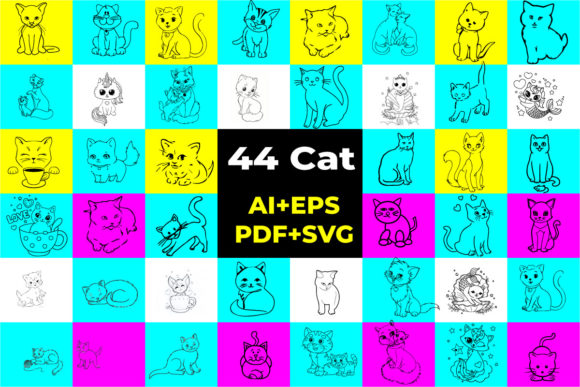
Reviewing the 44 Cute Cat Bundle for Embroidery
As a designer who spends half my life staring at digitized paths and the other half pulling bobbins, I have learned that not every graphic translates well to thread. When I first opened the 44 Cute Cat Bundle, my initial reaction was one of cautious optimism. The preview images suggested a playful, whimsical aesthetic that is currently dominating the handmade market. However, seeing a graphic on a screen is vastly different from watching a needle punch through fabric. My goal in this review is to evaluate whether these designs hold up under the mechanical stress of embroidery and if they deliver the visual impact needed for commercial success.
First Impressions: Mood and Layout
The immediate mood created by this collection is lighthearted and approachable. In the world of Crafts, especially within the pet niche, customers are looking for designs that evoke warmth and nostalgia. These cat illustrations achieve that through soft curves and expressive poses. From a technical standpoint, the fact that the design is square and centered is a significant advantage. It simplifies the hooping process, reducing the likelihood of user error during setup. For busy Etsy sellers or small shop owners, time is money, and a centered design means less fiddling with alignment marks.
The bundle includes the illustration in a Vector EPS file, specifically in an older version to ensure compatibility with legacy software. This is a thoughtful inclusion for designers who may not have upgraded their vector editing suites recently. However, as an embroidery professional, I must note that EPS files are vector graphics, not native embroidery files. You will need to digitize these or use auto-digitizing software with caution. The quality of your final embroidery file will depend heavily on how you translate these vectors into stitch types.
Real-World Application: The Tote Bag Test
To truly test the viability of the 44 Cute Cat Bundle, I imagined a specific real-life scenario: creating a custom embroidered tote bag for a local boutique. Tote bags are typically made from canvas or heavy cotton, which provides a stable base for stitching. I selected one of the simpler cat silhouettes from the bundle to simulate an applique design workflow.
In this context, the square layout worked beautifully. It allowed me to maximize the hoop area without worrying about awkward overhangs. If I were using a satin stitch for the outlines, the clean lines of the vector would help maintain crisp edges. For the interior details, a fill stitch would add texture and weight, making the cat pop against the fabric. The result would be a high-value handmade product that feels substantial and well-crafted. Customers reacting to such an item are likely to perceive it as a premium personalized gift, rather than a mass-produced commodity.
Versatility Across Product Lines
Beyond tote bags, these designs have strong potential in custom apparel. Imagine a minimalist cat face on the left chest of a sweatshirt. This is a classic sweatshirt embroidery placement that sells consistently. The cute aesthetic also translates well to baby embroidery projects, such as onesies or burp cloths, provided the stitch density is adjusted to remain soft against sensitive skin. For holiday embroidery, adding seasonal elements like a Santa hat or pumpkin to these cat bases could create instant bestsellers during peak shopping seasons.
For those interested in commercial embroidery, these assets can serve as the foundation for branded merchandise. A veterinary clinic or pet sitter could use these designs on uniforms or promotional items. The key is consistency. Using the same style across various design assets helps build brand recognition and trust.
Technical Considerations and Constraints
While the visuals are appealing, there are areas where caution is required. Embroidery is a tactile medium, and certain fabric textures can distort delicate details. If you are working with thin or stretchy fabric, such as jersey knit for t-shirts, you must use the appropriate stabilizer. Without proper backing, the stitch density might cause puckering, ruining the clean look of the cat’s features.
Small hoop sizes present another challenge. If you attempt to shrink these designs too much for a cap or a small patch, the fine details may merge together. Thread thickness plays a role here; using a finer thread might help preserve clarity, but it also increases production time. For curved surfaces like caps, the square centering is helpful, but you must account for the curvature in your digitizing process to prevent distortion.
Dark fabrics require special attention to thread colors. A light-colored cat on a black hoodie needs high contrast. I recommend testing your color palette in black and white mockups first. If the design loses its definition in grayscale, it will likely look muddy when stitched. Additionally, dense stitch areas can make garments stiff. For items like pillow covers or blankets that need to remain soft, consider using a running stitch for outlines instead of heavy satin borders.
Enhancing Visual Appeal and Brand Value
The ultimate goal of using the 44 Cute Cat Bundle is to create a finished product that stands out. High-quality embroidery enhances perceived value. When a customer sees tight, even stitches and a well-centered design, they associate that quality with your brand. This builds customer trust and encourages repeat business. For small shop products, this attention to detail is what separates hobbyists from professional entrepreneurs.
Furthermore, these designs are excellent for creating printable mockups for online listings. Since the source files are vectors, you can scale them infinitely for digital previews without losing resolution. This allows you to showcase your embroidery project on various products in your online store, giving customers a clear idea of what they are buying. Effective mockups can significantly boost buyer engagement and conversion rates.
Practical Notes for Designers
Before committing to a large production run, always test the design on scrap fabric. This step is non-negotiable. Check how the thread interacts with the fabric texture and adjust your tension settings accordingly. Verify the hoop size requirements for each specific cat design within the bundle, as some may be larger than others.
Since the package contains Vector EPS files, remember that you are responsible for the digitization process or ensuring your converter handles the curves smoothly. Inspect small details closely after the test stitch. Are the eyes symmetrical? Is the tail distinct? If not, you may need to manually edit the stitch path. Finally, always confirm licensing terms. While these are great for personal use, ensure you have the rights to use them for commercial embroidery and selling finished items. Clear licensing protects your business and respects the creator’s work.
In conclusion, the 44 Cute Cat Bundle offers a solid foundation for creative projects in the Graphics and crafts sector. With careful digitizing and attention to fabric choices, these designs can elevate your product line, offering charm and professionalism in equal measure. Whether you are making a single embroidered patch for a friend or stocking your online store with custom apparel, this bundle provides the versatility needed for modern makers.