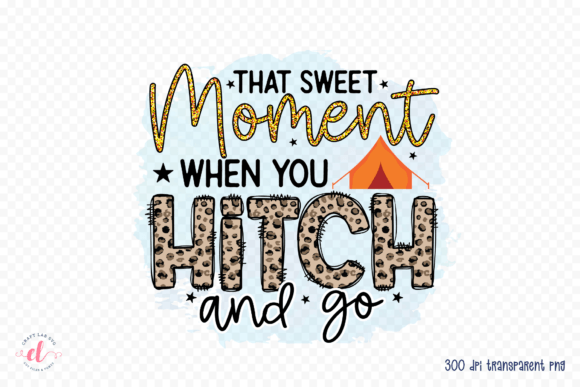
Reviewing That Sweet Moment when You Hitch and Go
As a designer who has spent countless hours staring at digitizing software and even more hours pulling bobbins out of jammed machines, I have learned to look past the pretty preview images. When I first encountered That Sweet Moment when You Hitch and Go, my initial reaction was not just about the aesthetic appeal, but about its viability as a functional machine embroidery design. In the world of Crafts and digital Graphics, it is easy to get lost in sublimation trends, but for us embroidery professionals, the question is always: how does this translate to thread?
This design, with its camping-inspired quote and rustic charm, targets a specific niche: the outdoor enthusiast who values sentiment over spectacle. For an Etsy seller or a small shop product creator, this is gold. However, before you list it as a premium personalized gift option, we need to dissect how it performs under the needle.
The First Impression: Mood and Layout
The visual personality of That Sweet Moment when You Hitch and Go is understated. It does not scream for attention with heavy satin stitch borders or complex shading. Instead, it relies on typography and simple iconography to convey a sense of adventure and tranquility. This minimalism is a double-edged sword in embroidery. On one hand, it reduces stitch count and production time. On the other, it leaves little room for error. Every wobble in a running stitch or inconsistency in tension becomes visible because there are no dense areas to hide behind.
The layout feels balanced, suggesting it was designed with readability in mind. For a tote bag design or a kitchen towel, this openness is crucial. Cluttered designs often look messy on textured fabrics, but this graphic breathes. It creates a mood that is perfect for holiday embroidery gifts for the camper in your life, or as a staple item in a boutique’s custom apparel line.
Real-World Application: From Screen to Stitch
Let’s talk about a real scenario. Imagine you are preparing a batch of canvas tote bags for a local craft fair. You choose That Sweet Moment when You Hitch and Go because it appeals to the growing demographic of "glampers" and nature lovers. You hoop your canvas, apply a cut-away stabilizer to prevent puckering, and start stitching.
Because the design likely features fine lines and text, the choice of thread colors is critical. A high-contrast combination, such as cream thread on olive green fabric, will make the quote pop. However, if you are working on a sweatshirt embroidery project, the looped texture of the fleece can swallow thin lines. In this case, I would recommend increasing the stroke width slightly during the digitizing phase or choosing a thicker embroidery thread, like a 30-weight rayon, to ensure the letters remain legible.
For baby embroidery items, such as a onesie or a burp cloth, this design works well due to its gentle theme. However, you must be cautious with the fabric. Knits stretch. If the hoop size is too large for the garment, or if the stabilizer is insufficient, the text may distort after washing. Always test on scrap fabric first. This is not just advice; it is a necessity for maintaining professional standards in your craft business.
Navigating Technical Challenges
While That Sweet Moment when You Hitch and Go is versatile, it is not universal. There are specific situations where you should proceed with caution. Small hoop sizes, such as 4x4 inches, might constrain the design if the quote is long. You need to verify the dimensions of the embroidery file to ensure it fits without scaling it down to the point of illegibility.
Textured fabrics present another challenge. If you are stitching this onto a waffle-weave tea towel or a rough linen, the intricate parts of the quote may get lost. In these cases, consider using an applique design technique where the text is cut from a contrasting fabric and stitched down, rather than relying solely on thread. This adds dimension and ensures clarity.
Dark fabrics require careful planning. If you are stitching light thread on a black hoodie, you must use a topping or a water-soluble film to prevent the dark fabric from poking through the stitches. This is especially important for the thinner parts of the lettering. Without proper tension adjustment and stabilizer support, the final product may look amateurish, damaging your brand’s reputation.
Commercial Viability and Brand Consistency
For commercial embroidery projects, consistency is key. That Sweet Moment when You Hitch and Go offers a clean, professional look that aligns well with modern rustic branding. It does not look dated, which means it has longevity as a design asset. When customers see a well-executed version of this design on an embroidered patch or a cap, they perceive higher value. It suggests thoughtfulness and quality.
However, as a digital embroidery file seller or a finished goods producer, you must clarify licensing. The product description mentions it is a sublimation design, which raises questions about its format for embroidery. Is it already digitized? Or do you need to convert it? If it is a graphic intended for sublimation, you cannot simply send it to an embroidery machine. You must ensure you have the correct embroidery file format, such as PES, DST, or EXP, compatible with your machine. Never assume a graphic is ready for stitching without verification.
Practical Designer Notes for Success
To get the best results from That Sweet Moment when You Hitch and Go, follow these practical steps:
- Test on Scrap Fabric: Always run a test stitch-out on the same type of fabric you intend to use for the final finished product. This reveals tension issues and color clashes.
- Check Thread Contrast: Use a black-and-white mockup to see if the design holds up without color. If it disappears in grayscale, it will likely struggle on low-contrast fabrics.
- Review Stitch Density: Ensure the density is appropriate for the fabric. Too dense, and you risk perforating lightweight materials; too sparse, and the backing shows through.
- Confirm Hoop Size: Match the design dimensions to your hoop. Do not force a large design into a small hoop by scaling it down excessively.
- Inspect Small Details: Zoom in on the digitized file. Look for unnecessary jump stitches or trims that can slow down production and increase thread waste.
- Verify Licensing: Before selling items made with this design, confirm whether the license allows for commercial use. This protects your small business from legal issues.
In conclusion, That Sweet Moment when You Hitch and Go is a promising addition to your library of Graphics and Crafts resources. It captures a sentimental mood that resonates with today’s consumers. However, its success depends entirely on your technical execution. By respecting the limitations of the medium and preparing your materials correctly, you can transform this digital concept into a tangible, high-quality handmade product that customers will cherish. Whether it ends up on a cap, a pillow cover, or a printable mockup for your online store, treat it with the precision it deserves, and it will reward you with professional results.